
I said I’d blog more, so here I am, with another blog, this time on the code of conduct.
There’s been a spattering of interest regarding the vote outcome on the council code of conduct (from here referred to as the code) from the Dec 4, 2023 council meeting at agenda item E.2 here that saw Mayor Yu and Councillor Klassen opposed citing concerns over the code being undemocratic due to the city manager playing a role in the complaint process and asking instead for an ethics commissioner.
Let’s perhaps first start with why we undertook this work in the first place. Our old code was written in 2013 and has not been updated since. It contains no provisions for how to actually bring forth a complaint, nor does it contain how to handle a complaint should one be brought forward. Given that its purpose is to help us navigate a complaint, this is a pretty big issue that needed to be resolved.
So, why is this important? Some might not know, but council members are not employees of the city, therefore, WorkSafeBC and other provincial rules that apply to ‘employees’ do not apply to council. Yes, it’s odd, and many municipalities have filed resolutions with NCLGA and UBCM asking the province to fix this issue. Until it is fixed, having a code is the workaround – which until this term when the province mandated councils consider implementing a code – keyword is considered… was not mandatory.
So that brings us back to our code. On Monday, lawyers from Anderson Young, who drafted our code presented to council, a code for first three readings. Council was able to put motions forward for amendments and a few were adopted making some minor language changes. It’s important to note that UBCM formed a Working Group On Responsible Conduct in 2016 and this group has done important work making resources available to local governments around the formation of codes. You can review more info on that here. Our code, in my opinion, follows the resource laid out by the Working Group and fixes the gap that existed in the previous version. It is in effect an upgrade.
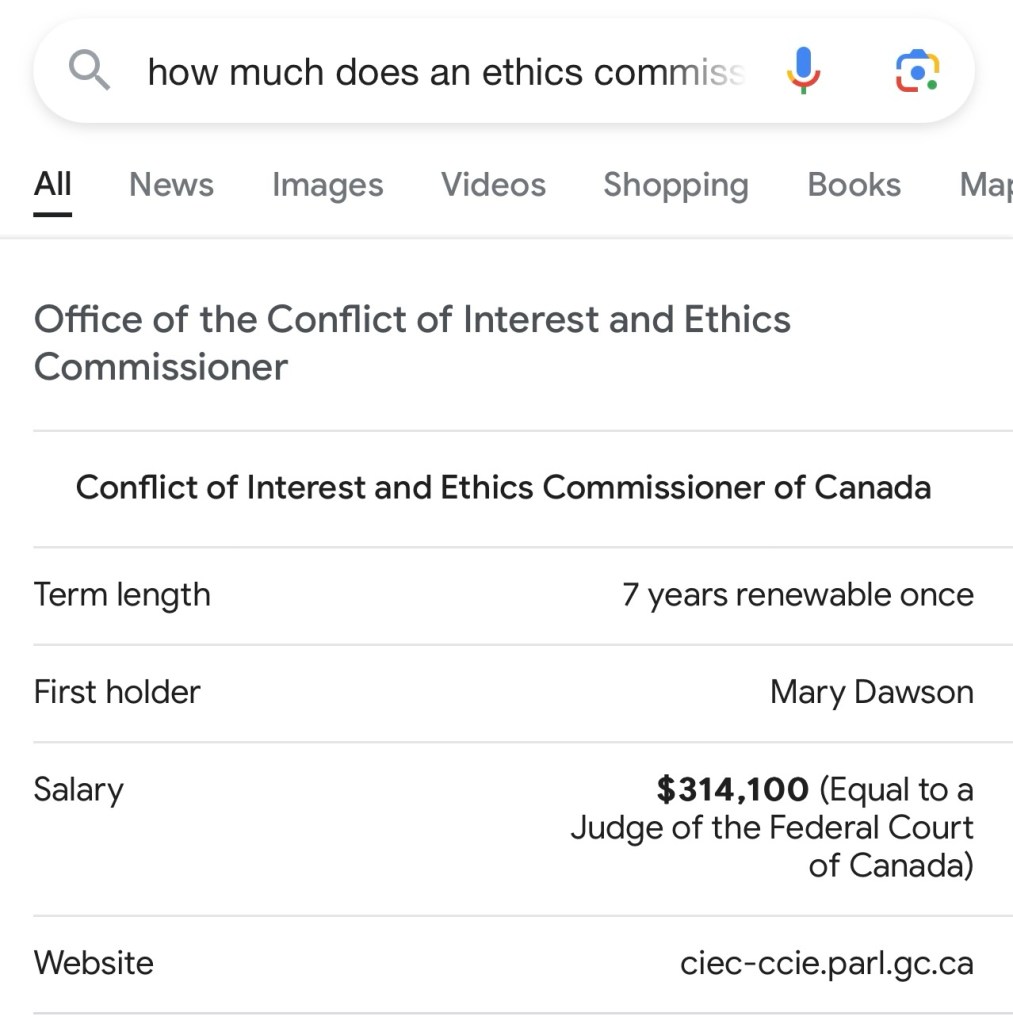
So why was there opposition? Despite the fact that there are very few municipalities with an ethics commissioner, some believe this is more appropriate than utilizing the city manager (whose role is limited and who mostly acts as a facilitator between a complainant and an investigator) for this administrative function. A Google quick search shows that Ethics Commissioners earns the same salary as a Federal Court Judge which is around $314,300. And to hire an ethics commissioner, you need to hire a law firm which means likely a retainer fee meaning it would cost even more.
Here’s the point I made that I thought resolved the issue: White Rock submitted a resolution to UBCM in 2022 asking that the province create an ethics commissioner office for municipalities – a resolution that was endorsed meaning this office could become available to municipalities in the future without us having to fund the position.
Not all were swayed by this argument however, and the two that disagreed cited the code as being undemocratic due to the perceptive nature of requiring the city manager to delve into a council conflict. It should be noted that the code of conduct is not just for council but it is also for employees who could lodge a complaint against a council member – and by chain of command standards, taking said complaint to our highest ranking emoloyee is appropriate.
So that the gist of the code of conflict debate. What do you think of codes in general or of ours specifically (it’s linked in the report above and attached in the bylaw)? What choice would you have made regarding an ethics commissioner? And do you think a code of conduct is undemocratic?
 coriramsay